
L-Sit Progression: From Tuck Sit to a Full L-Sit
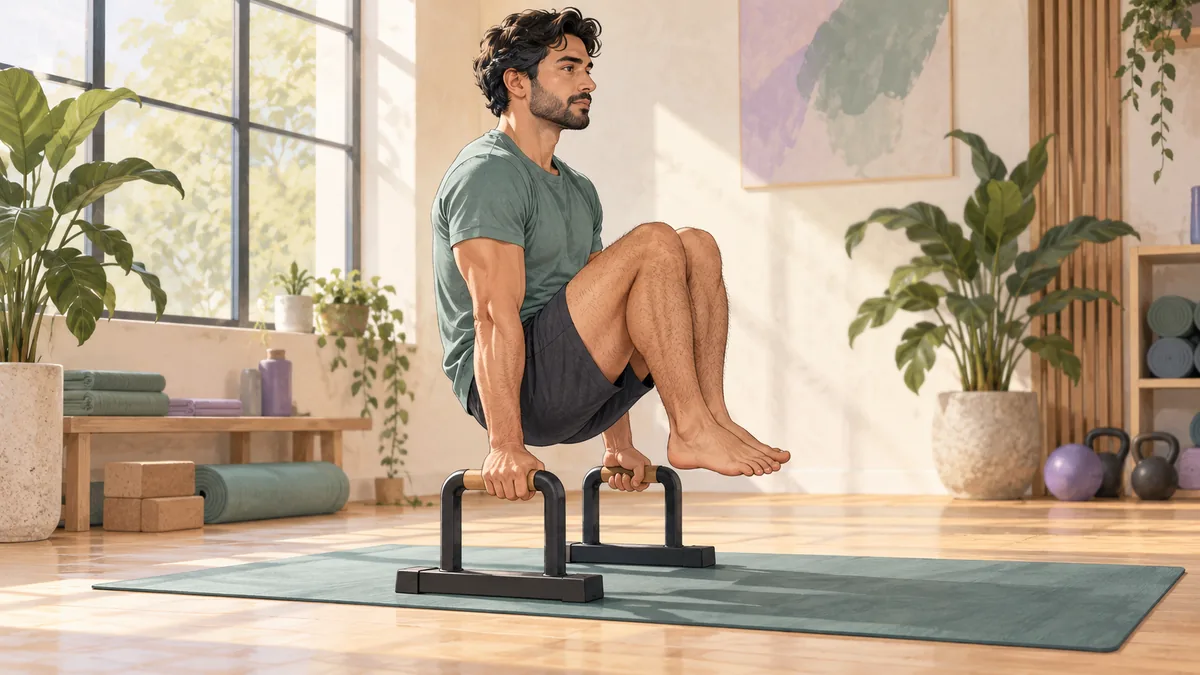
An L-sit supports the body on the hands while the legs extend forward. Before trying the final shape, you can practise foot-supported holds, tucks, and small leg movements. Difficulty does not identify one weak muscle or mean you must force a deeper hamstring stretch.
Use this guide to organize options and discuss technique with a qualified coach. The example amounts are not validated readiness tests.
Choose low, stable equipment
Use purpose-built low parallettes rated for your weight on a level non-slip surface. Check their condition and spacing according to the manufacturer. Avoid stacked books, household chairs, loose blocks, or high dip bars as a beginner substitute.
Low equipment keeps the return to foot support short, but it can still move or tip if unsuitable. AAOS gymnastics guidance emphasizes maintained equipment, clear spacing and coaching for new skills. It does not establish a specific adult L-sit protocol.
Start with the feet down
Sit between the handles with knees bent and feet on the floor. Hold the bars, gently press down, and explore taking some weight through the arms while the feet keep assisting. Keep the arms comfortably straight without forcing the elbows backward.
Try a few short holds, perhaps 3–5 seconds each, and return smoothly to sitting. If the wrists, elbows, or shoulders hurt, stop rather than pushing the shoulders farther down.
Select the next variation
Foot-supported lift
Lift the hips a small comfortable amount while the feet remain supported. The amount of foot help can change the difficulty. Keep enough assistance to lower under control.
Tuck support
With your coach, explore bringing one foot briefly clear, then a bent-knee tuck if appropriate. Keep the feet close enough to return easily. A few controlled seconds are more useful than hanging on until the shoulders collapse.
One-leg extension
From a manageable tuck, extend one leg only as far as you can maintain support. It may remain bent or below horizontal. Return before switching; avoid swinging the leg to create the position.
Two-leg extension
This is the target skill, not an obligatory endpoint. A coach can help decide whether extending both legs is appropriate and how to return. Do not force knee hyperextension to make the shape appear straighter.
Add only a small amount of extra work
A seated single-leg lift can practise active leg movement without full body support. Sit upright with hands assisting on the floor, lift one leg a little if comfortable, then lower. Bend the knee or sit higher if needed.
Pick this or a suitable hold rather than stacking several compression drills, hanging raises, and the full hamstring routine into every session. A toe-touch result does not predict whether your knees will bend in an L-sit.
Choose the change that matches the difficulty
| What limits the attempt | Practical adjustment |
|---|---|
| Equipment shifts | Stop and correct the setup |
| Arms cannot maintain comfortable support | Keep more weight through the feet |
| Legs cannot stay extended | Return to a tuck or one-leg version |
| You cannot lower smoothly | Shorten the attempt and add assistance |
These adjustments do not diagnose the cause. For pain, numbness, swelling, or ongoing symptoms, obtain individual assessment.
Track total support work
An example starting practice is a few brief assisted holds within two non-consecutive strength sessions, adjusted to recovery and coaching. Record the variation, assistance, comfortable seconds and next-day response. Count it together with other pushing and hand-balancing work.
For instance, an imaginary reader repeats short foot-assisted lifts comfortably before trying a brief tuck with a coach. They retain assistance when fatigue increases. No twenty- or thirty-second target is needed to make that decision.
The hollow-hold guide offers another floor option, but it does not replace the specific support practice and equipment checks here.
Sources and further reading
These resources support the topics noted below. The practice routine and progression checkpoints are Ko Myat examples, not programs endorsed by these sources.
- AAOS OrthoInfo: Gymnastics Injury Prevention — Suitable equipment, spacing, coaching and spotting. Also contains youth-specific advice; not an adult progression study.
- Mayo Clinic: Strength Training — General resistance selection and recovery guidance; not validation of skill checkpoints.
More Gymnastics guides
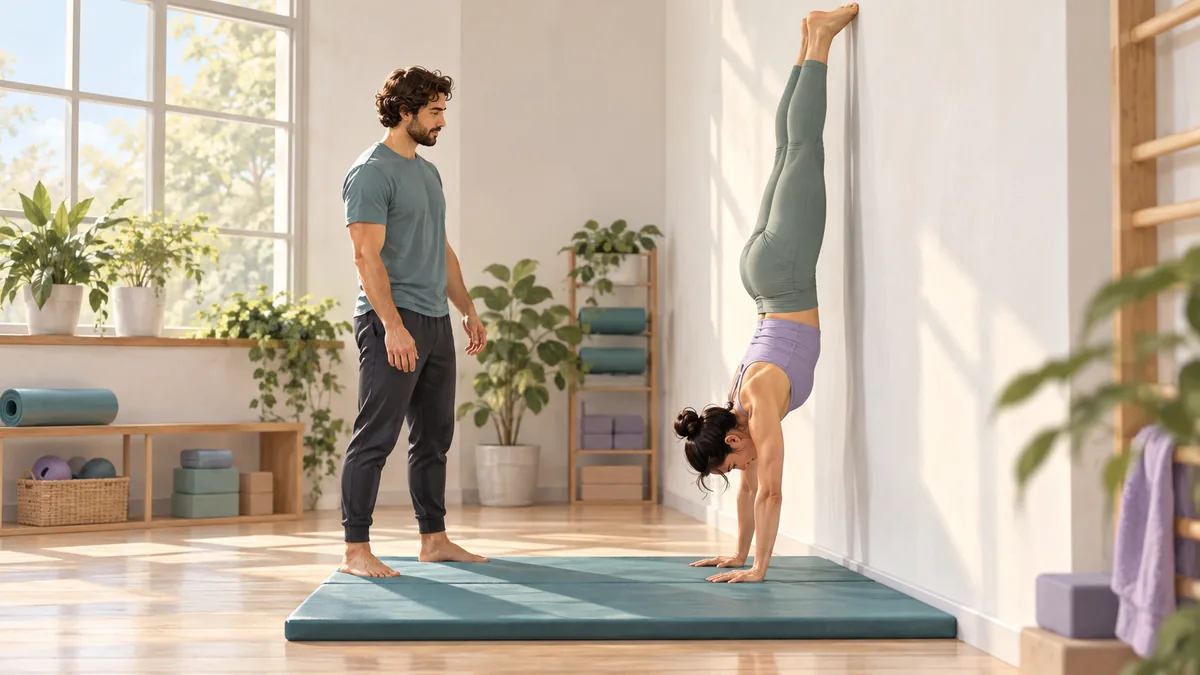
Wall Handstands for Adults: Preparation, Coaching and Progression
Plan handstand preparation, learn entries and exits with a coach, and track control and workload before reducing wall support.
· 3 min read
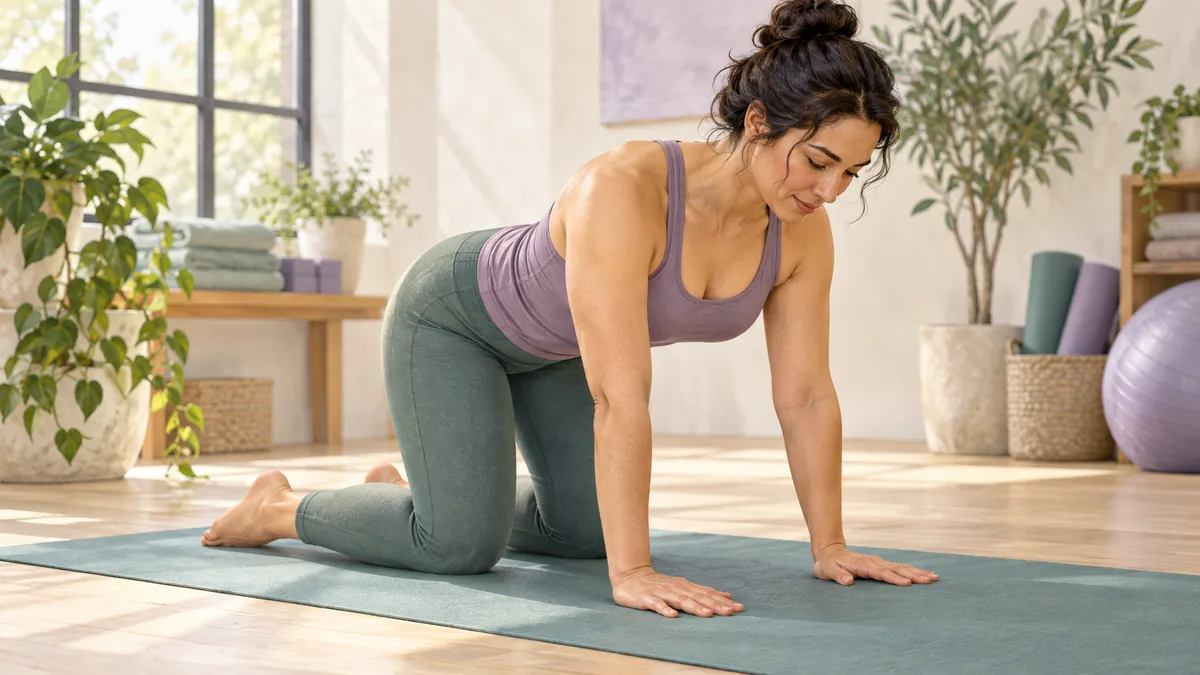
Wrist Preparation and Load Management for Hand-Supported Exercise
Use light wrist preparation, optional manageable resistance, and a loading log for push-ups and gymnastics without treating pain as a training target.
· 3 min read
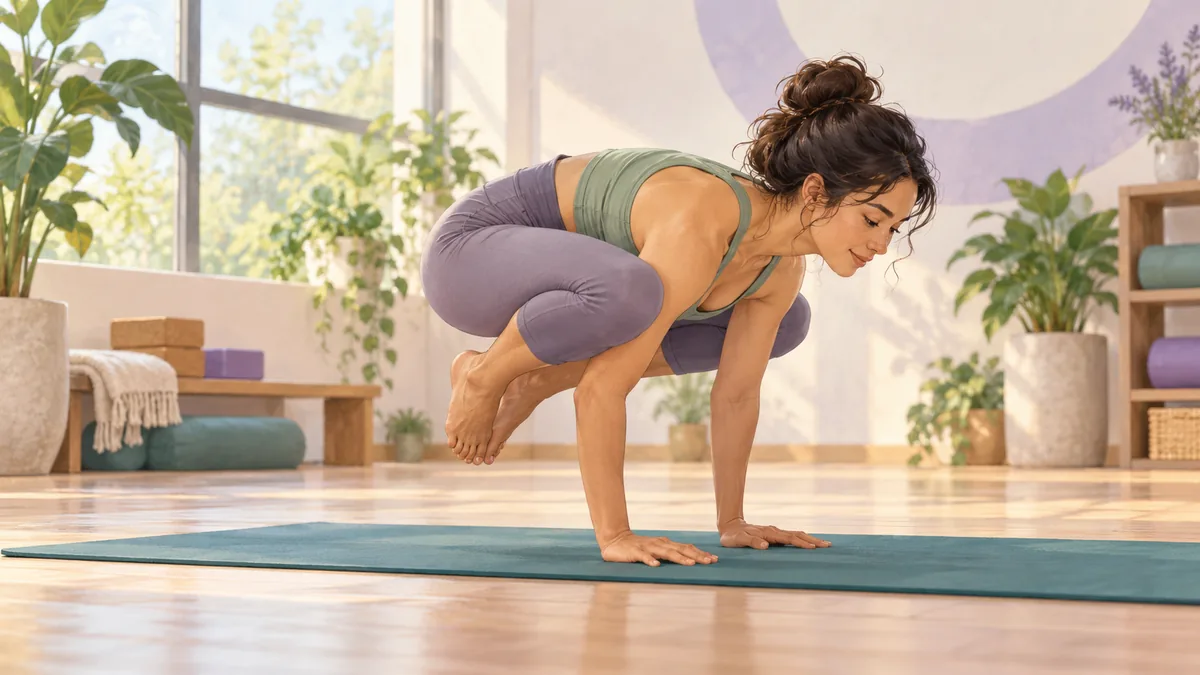
Frog Stand: How to Learn Your First Arm Balance
Explore frog-stand setup, low weight shifts, short holds, and the limits of learning an arm balance without qualified coaching.
· 3 min read