
Tight-Feeling Hamstrings: Comfortable Movement and Stretching Options
A tight feeling at the back of the thigh does not tell you whether a muscle is short or why movement feels restricted. Toe-touch distance also depends on more than the hamstrings, including the way you move and your body proportions.
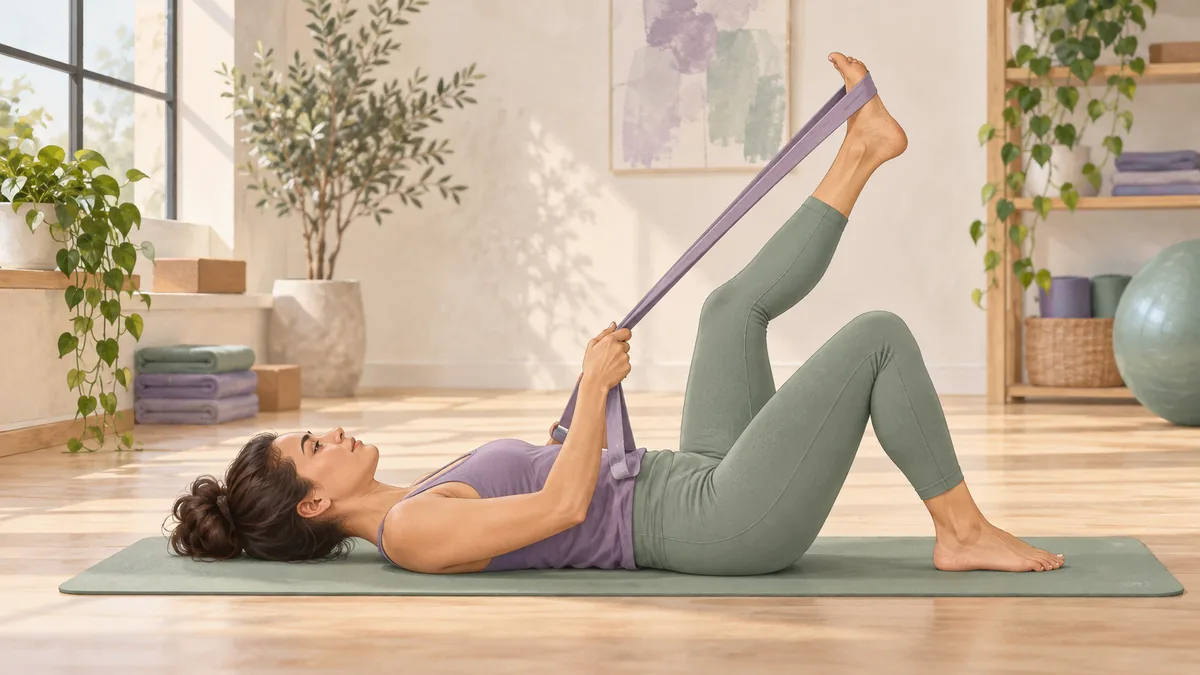
Use this guide for comfortable general movement, not to diagnose a muscle or nerve problem. The cover shows one strap-assisted option; it is not a target leg angle.
Decide whether stretching is the right next step
If you have a recent strain, pain after a specific incident, symptoms affecting walking, or a history that makes exercise suitability uncertain, obtain individual advice first. Stop a stretch that produces burning, tingling, numbness, or pain travelling down the leg.
The NHS sciatica guidance describes radiating pain, altered sensation and weakness that can involve the back of the leg. This does not mean that every tight hamstring is sciatica. Do not provoke symptoms by combining ankle and neck movements to “test the nerve.”
New bladder or bowel control problems, numbness around the genitals or anus, or severe or worsening symptoms affecting both legs require emergency assessment. Do not wait for a stretching routine to help.
Choose a comfortable range observation
After easy movement, lie with both knees bent and feet planted. Gently raise one thigh with the knee bent, then straighten the knee a small amount if comfortable. Stop before strain, and return the foot to the floor.
This is an observation to choose a starting range. It cannot distinguish muscle tightness from nerve sensitivity, identify a cause, or clear an injury.
A small practice menu
Warm up with a few minutes of comfortable walking or similar activity. Choose one stretch and, optionally, a movement drill. There is no requirement to complete a twelve-minute routine or reach the toes.
Lying strap-assisted stretch
Lie on your back with one foot planted and the knee bent. Place a strap around the other foot and raise that leg gently. Keep the raised knee slightly bent if needed, and let the strap assist without pulling hard.
Use mild tolerable tension. An initial hold of perhaps 15–30 seconds is an example you can shorten. Lower under control before changing sides. Do not aggressively pull the toes toward you or keep stretching if symptoms radiate.
Supported hip hinge
Stand near a fixed support with soft knees. Move the hips back a small amount while the torso tips forward comfortably, then return. Try a few slow repetitions rather than reaching for the floor.
This practises a movement pattern. It does not show that rounded-back movement is inherently harmful or prove which tissue limits a toe touch.
Optional seated leg movement
Sit with the hands supporting you and one knee bent as needed. Try a small, comfortable leg lift and lower. If you cannot lift without straining or leaning heavily, use a smaller range or leave it out. Active lifting is a separate task, not evidence that stretching gains will become permanent.
Set the amount by response
Mayo Clinic’s general stretching advice supports warming up and avoiding pain. It does not establish this menu as a treatment or predict improvement in two to four weeks.
Try a small amount on selected days and record comfort afterward and the next day. Repeat a manageable setup before increasing duration or range. If symptoms persist, worsen, or substantially limit ordinary movement, seek assessment instead of adding more stretching.
Track the same thing each time
Record strap assistance, knee bend, comfortable position and any symptoms. A photo or reach distance is only comparable when the setup stays similar. More knee bend or a changed camera angle can make a result look different without showing a specific tissue change.
For example, a reader may reach the same comfortable angle with less strap assistance. Another may need a bent knee on a tired day. Neither needs to force a straighter leg to meet a deadline.
For a specific flexibility goal, use the front-split or pancake guide separately. Do not add every complete routine together, and do not use those goals to override concerning symptoms.
Sources and further reading
These resources support the topics noted below. The practice routine and progression checkpoints are Ko Myat examples, not programs endorsed by these sources.
- Mayo Clinic: Stretching and Flexibility — Warm muscles, comfortable tension, no bouncing, and general stretching practice; not a splits prescription.
- NHS: Sciatica — Radiating symptoms and emergency warning signs; not a self-test for hamstring tightness.
More Flexibility guides
Front Splits for Beginners: A Supported Stretching Routine
Choose supported hip and hamstring stretches, practise a controlled return, and track a comfortable range without a fixed split deadline.
· 3 min read
How to Sit in a Deep Squat: Ankle and Hip Mobility Guide
Explore supported squats and comfortable ankle movement, choose stable equipment, and track depth without treating a self-check as a diagnosis.
· 3 min read
Static vs Dynamic Stretching: When to Use Each
Compare held and moving stretches, understand active versus passive work, and choose stretching that fits the session and performance context.
· 3 min read