
Static vs Dynamic Stretching: When to Use Each
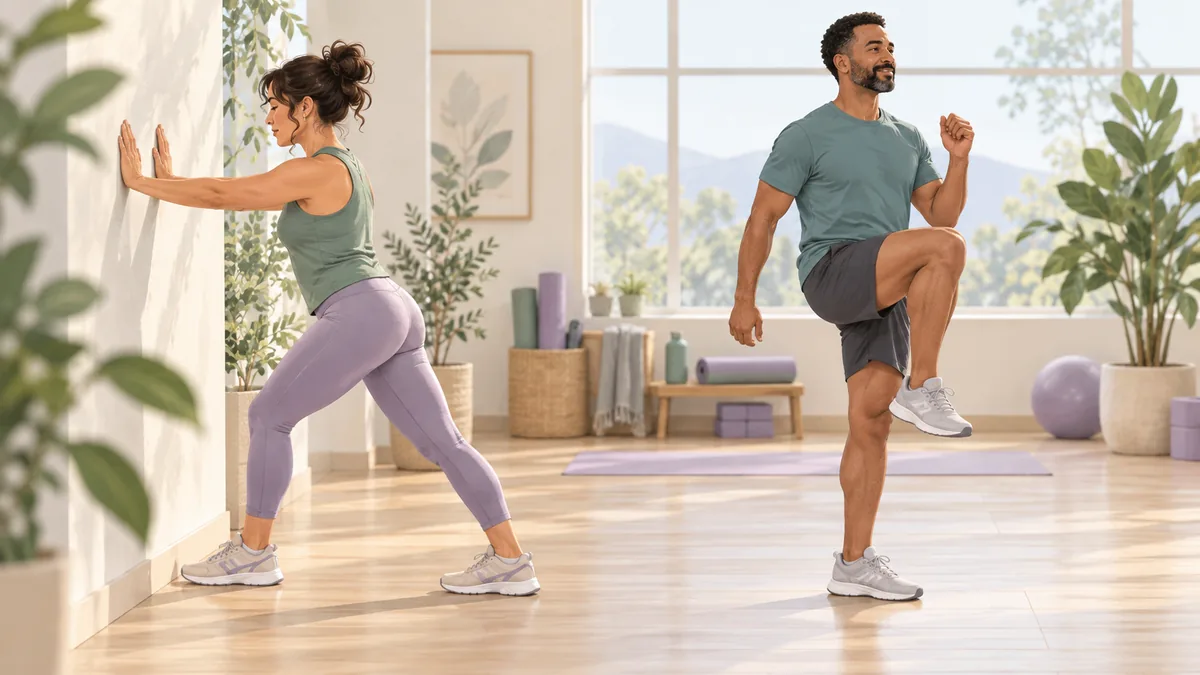
“Stretch before exercise” is incomplete advice because the type, amount, and next activity matter. A held calf stretch, controlled marching, and a long assisted split are different tasks. Choose according to the session instead of treating all stretching as interchangeable.
This guide explains terms and practical placement. It does not prescribe a stretching dose for an injury or promise injury prevention.
Static: move into a position and hold it
A static stretch holds a comfortable position, often with support from the floor, a strap, or your own hands. Examples include a gentle lying hamstring stretch or a supported calf stretch. Keep the tension tolerable and avoid forcing deeper as the timer runs.
Static stretching can be part of flexibility practice. It is not a replacement for gradually preparing to exercise, and doing it after a workout does not guarantee less soreness.
Dynamic: move through a controlled range
Dynamic stretching uses repeated movement rather than a long hold. Comfortable arm circles, small leg swings and walking movements can be examples. Start with a modest range and do not use momentum to force the limb beyond your control.
For a warm-up, select movements that relate to the session and follow them with easier versions of the exercises. Our warm-up guide uses this approach; it remains an example rather than a universal sports protocol.
Active and passive describe who supplies the force
“Active” often means your own muscles maintain the position, such as lifting a leg and holding it briefly. “Passive” involves outside support or assistance. These labels overlap with static and dynamic: an active hold can also be static.
An active leg lift is a separate strength and coordination task from a strap-assisted stretch. Being able to reach a position with assistance does not establish that you can hold it under load in an L-sit or handstand.
What about contract-relax and bouncing?
Contract-relax methods combine a stretch with muscle contractions and further relaxation. They are not necessary for starting general flexibility work. Learn any more demanding method with a qualified professional rather than contracting strongly at your limit or having a partner press farther.
Ballistic methods use bouncing or momentum. They are outside this beginner menu. Do not confuse controlled dynamic movement with repeatedly forcing the end of a stretch.
Static stretching immediately before performance
The systematic-review abstract by Behm and colleagues reports that immediate performance effects vary with stretching duration, with larger average reductions after longer static stretching exposures. It also highlights the context of subsequent dynamic activity.
This is not a universal rule that one short hold is harmless or a particular second makes performance collapse. The authors’ university research summary also explains why unusually long holds and incomplete warm-ups affect interpretation. Research averages cannot predict your next lift or sprint. Before explosive or maximal work, discuss specific flexibility needs with a coach and retain a gradual, task-specific warm-up.
Match the choice to the session
| Situation | Reasonable starting choice | Important limit |
|---|---|---|
| General strength warm-up | Easy movement, controlled ranges, easier exercise rehearsal | Do not turn it into fatigue work |
| Dedicated flexibility practice | Warm up, then select a few comfortable held or active options | Do not force a target depth |
| An easy day | Optional gentle movement or rest | It should not become another demanding session |
| A painful or injured area | Individual advice | This table is not a rehabilitation plan |
The Mayo Clinic stretching overview emphasizes warming muscles, not bouncing, and avoiding pain. It also notes mixed findings about some proposed benefits. Stretching alone is not an assurance against injury.
Put the idea into a real decision
Suppose an imaginary reader wants both push-up strength and greater hamstring range. They can warm up and practise push-ups first, then do a small comfortable hamstring session afterward or on another day. They do not need to perform a long split routine before every push-up session.
Keep a note of the type, position, amount, and response. If a stretch causes pinching, sharp pain, numbness or tingling, stop and seek suitable advice. If it is comfortable, repeat a manageable amount before increasing it. The question is whether the choice serves the session, not whether one type of stretching is always best.
Sources and further reading
These resources support the topics noted below. The practice routine and progression checkpoints are Ko Myat examples, not programs endorsed by these sources.
- Mayo Clinic: Stretching and Flexibility — Warm muscles, comfortable tension, no bouncing, and general stretching practice; not a splits prescription.
- Behm et al. (2016): Acute Effects of Stretching — Systematic-review abstract: performance effects depend on stretching duration and warm-up context; not a universal cutoff.
- Memorial University: Stretching Research Summary — The lead author's institution explains stretching duration and a complete warm-up in interpreting the 2016 review.
- NHS: Warming Up Before Exercise — General warm-up example and exercise suitability; not the Ko Myat sequence.
More Flexibility guides
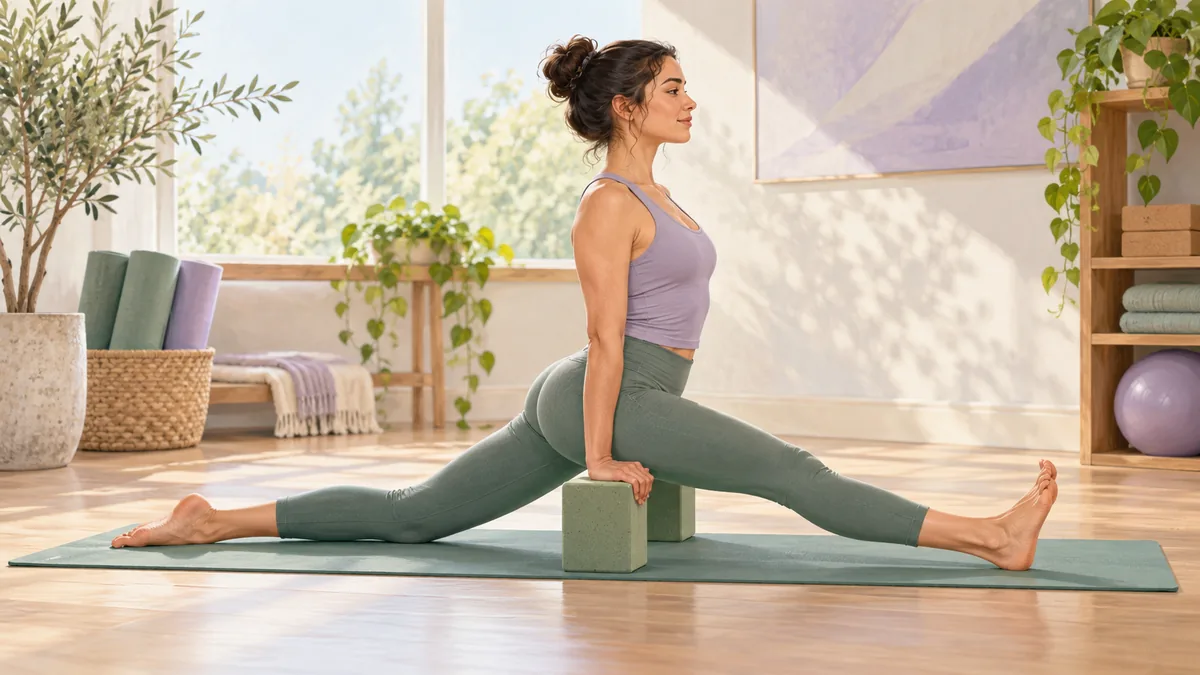
Front Splits for Beginners: A Supported Stretching Routine
Choose supported hip and hamstring stretches, practise a controlled return, and track a comfortable range without a fixed split deadline.
· 3 min read
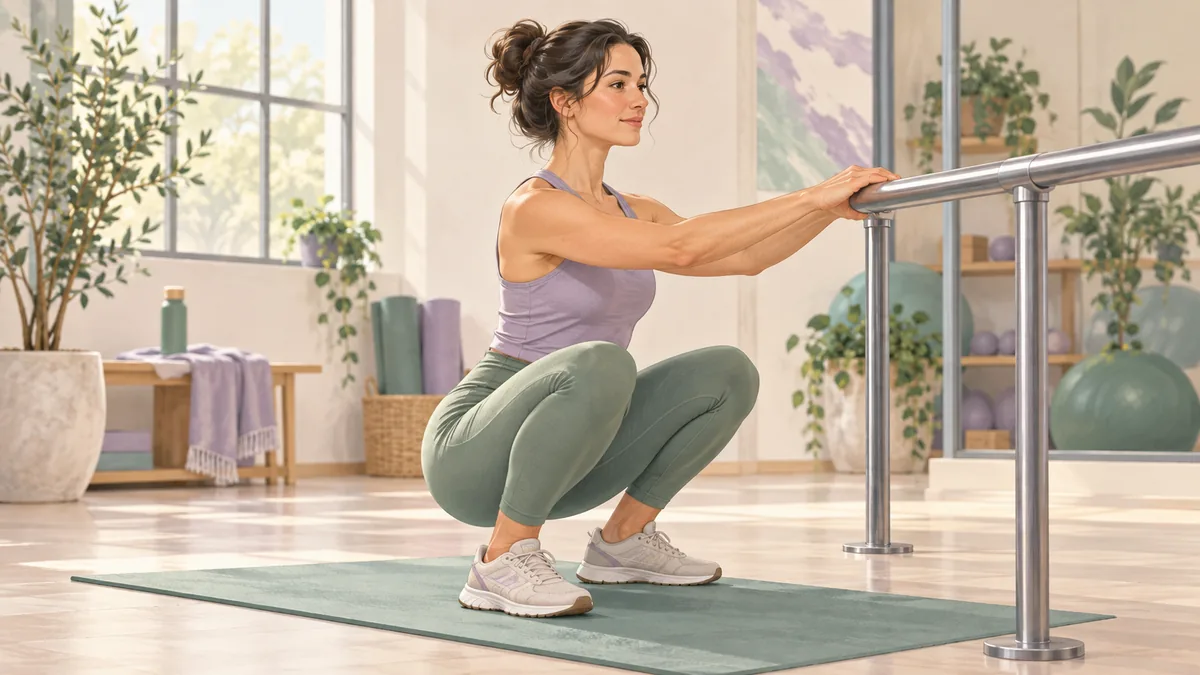
How to Sit in a Deep Squat: Ankle and Hip Mobility Guide
Explore supported squats and comfortable ankle movement, choose stable equipment, and track depth without treating a self-check as a diagnosis.
· 3 min read
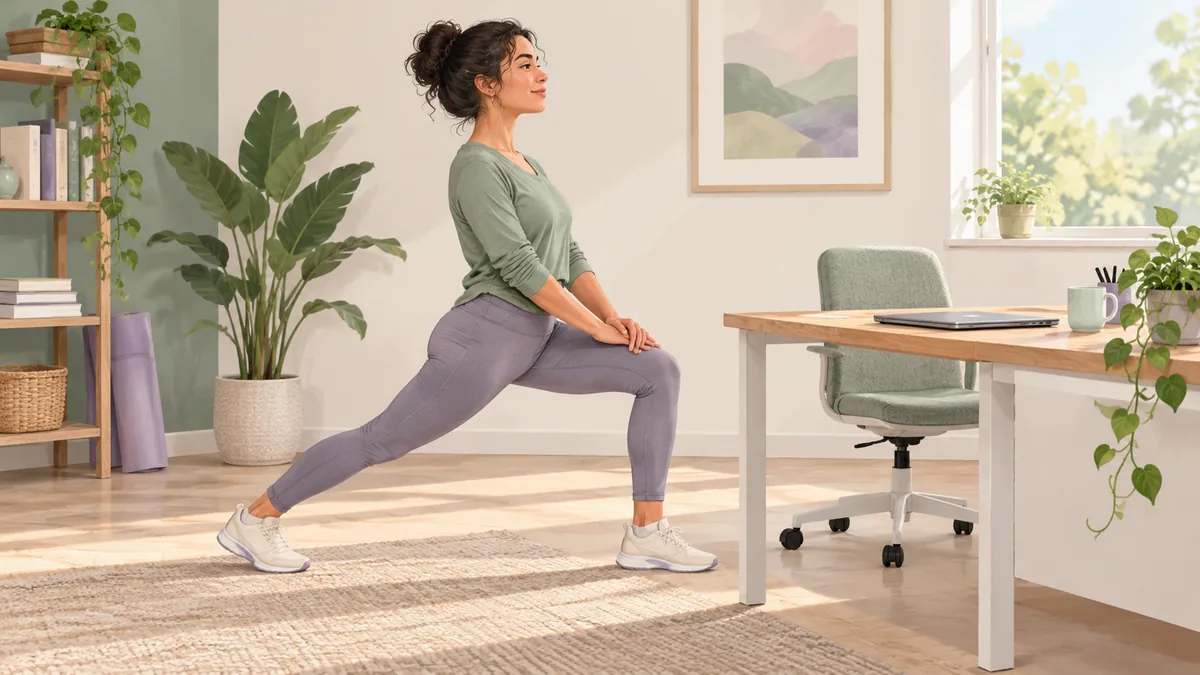
Hip Mobility for Desk Workers: Short Breaks and Floor Options
Choose a brief standing movement break or a comfortable floor routine, with alternatives for kneeling and a way to track what suits your day.
· 3 min read