
The Pancake Stretch: Supported Straddle and Forward-Hinge Practice
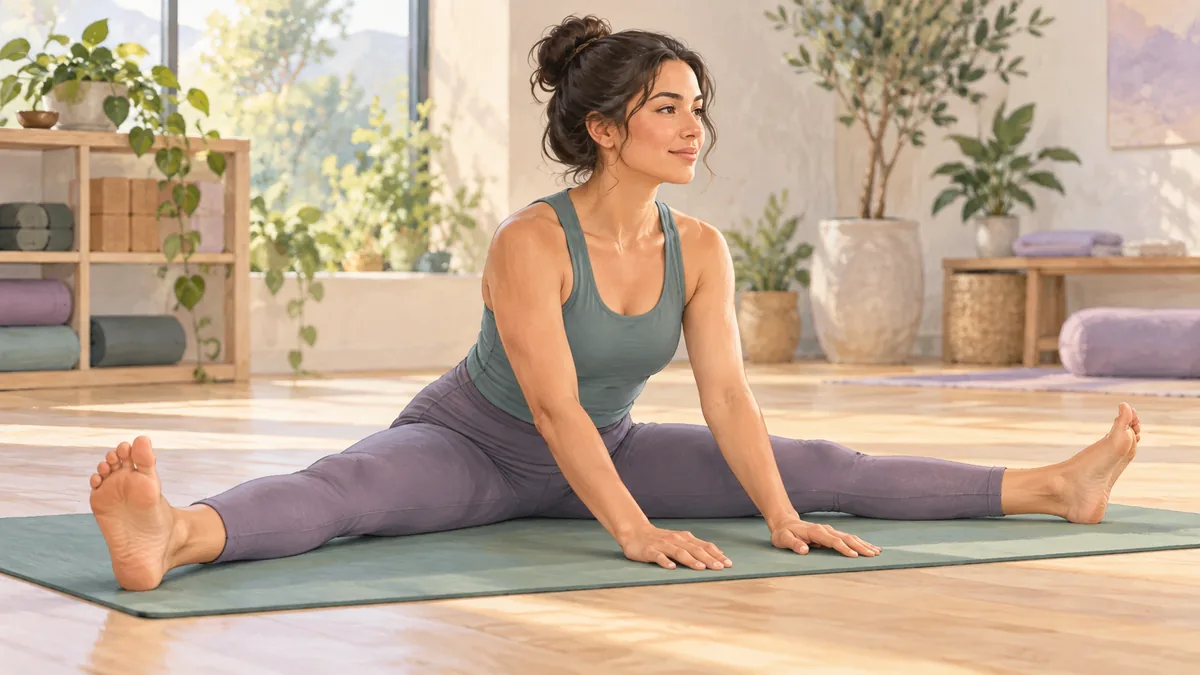
The pancake is a forward fold from a seated straddle. You can explore it in a narrow, upright position long before the chest approaches the floor. The goal of this guide is a repeatable hip-hinge practice with support, not a promise of folding flat.
The cover shows the upright starting position. It does not demonstrate the amount of forward fold you should use.
Separate three things you can change
Straddle width, knee bend, and forward reach are different variables. If you widen the legs and straighten the knees while reaching farther, you cannot tell which change affected the sensation.
Start with a comfortable leg separation and keep a small knee bend if helpful. Sitting higher on a folded blanket may make the position easier to organize. Use the hands behind you for support if needed.
Find a small forward hinge
After easy movement to warm up:
- Sit in your chosen straddle with the torso comfortably upright.
- Place the hands on the floor where they support you without pulling.
- Tip forward a small amount from the hips while keeping the trunk comfortable.
- Stop before you need to drag yourself farther with the arms.
- Return upright under control.
Do not force a lower-back arch or press the knees flat. Some spinal movement may occur; rounding does not mean that the entire stretch has suddenly moved out of the hips or that the exercise has lost all value. The useful question is whether the chosen movement remains controlled and comfortable.
Choose a first practice
Try a few small hinges, then one short comfortable hold if appropriate. About 15–30 seconds can be an initial example, with less if needed. You do not have to perform long passive holds or contract-relax efforts to begin.
Mayo Clinic’s stretching guidance supports smooth movement and tension that does not hurt. It does not validate a specific pancake dose or a timetable for reaching the floor.
Avoid added weights on the back, partner pressure, or pulling hard on an anchored strap. Those change the force and can take you beyond a range you can leave comfortably.
Add active movement separately
If you can sit comfortably, you may explore lifting one leg a very small amount with the hands supporting you. Bend the knee or narrow the straddle if necessary. Keep this as a separate coordination or strength task rather than claiming it automatically “locks in” new flexibility.
Start with only a few repetitions and count them toward the session’s work. There is no need to combine lift-offs, weighted hinges, wall straddles and intensive contract-relax stretching in the same beginner session.
Make adjustments that match the problem
| Observation | Useful adjustment |
|---|---|
| You need your hands far behind you to sit | Sit higher, narrow the stance, or bend the knees |
| The only way forward is pulling hard | Reduce reach and retain hand support |
| You feel knee strain or hip pinching | Stop that range rather than forcing alignment |
| Symptoms travel down the leg | Stop and obtain appropriate advice |
Tingling, numbness, sharp pain or persistent symptoms are not stretching targets. This guide cannot tell whether a limit comes from a muscle, joint, nerve, or technique.
Measure a position you can reproduce
Record seat height, leg width, knee bend, hand placement and comfort. A side photo can help compare the same position, but chest-to-floor distance changes with proportions and spinal position. Do not use it as a universal flexibility score.
An imaginary reader keeps the same straddle width and seat height for several sessions, then finds a slightly larger comfortable hinge. That is a more interpretable change than a photo taken at a wider stance with a rounded back.
Repeat a manageable amount on selected days with time to recover. No personal timeline to a flat pancake can be inferred from this guide. If your main goal is sideways leg opening, choose the middle-split guide rather than automatically adding both complete routines.
Sources and further reading
These resources support the topics noted below. The practice routine and progression checkpoints are Ko Myat examples, not programs endorsed by these sources.
- Mayo Clinic: Stretching and Flexibility — Warm muscles, comfortable tension, no bouncing, and general stretching practice; not a splits prescription.
More Flexibility guides
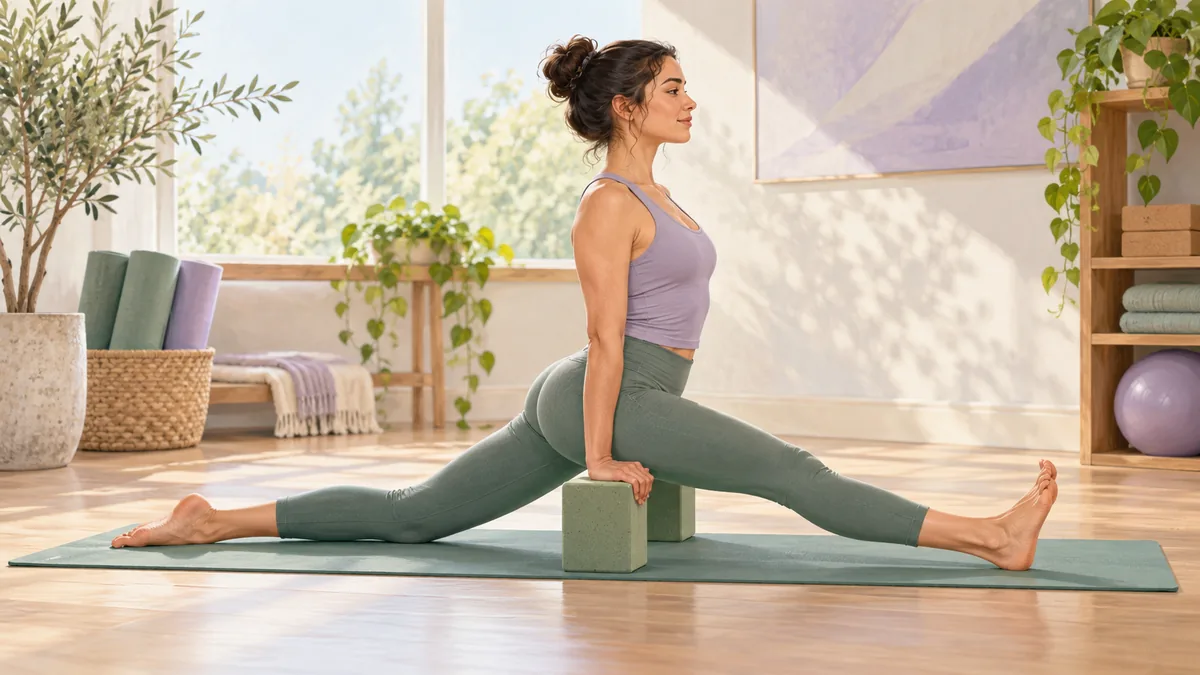
Front Splits for Beginners: A Supported Stretching Routine
Choose supported hip and hamstring stretches, practise a controlled return, and track a comfortable range without a fixed split deadline.
· 3 min read
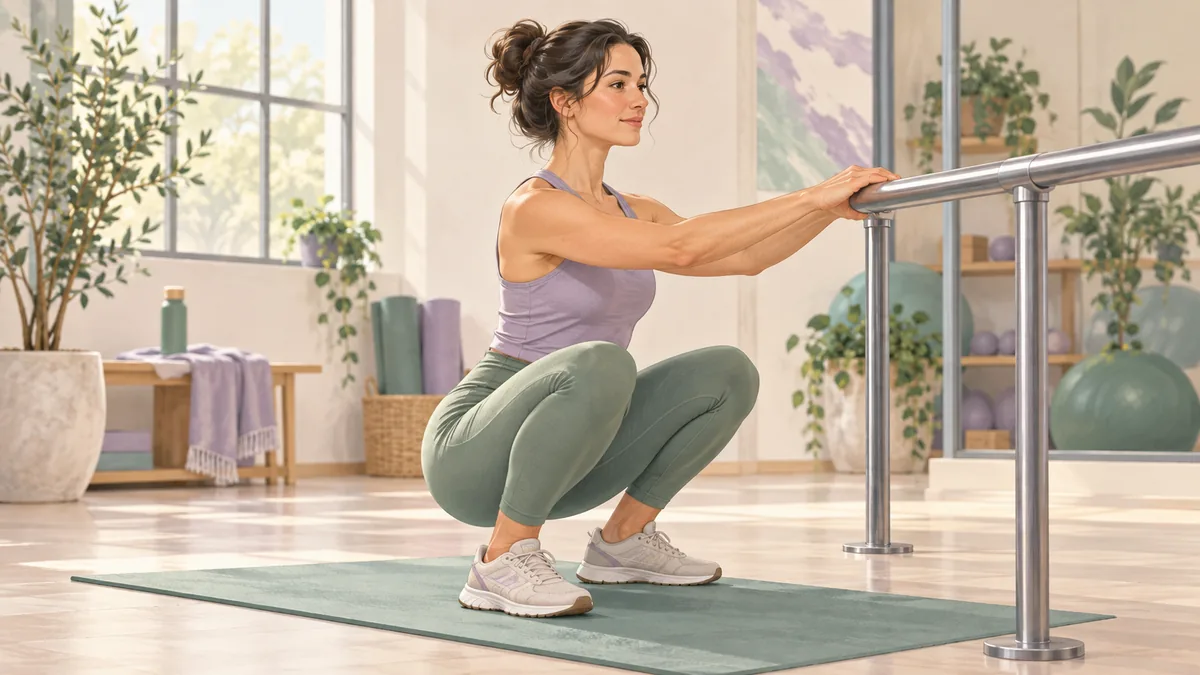
How to Sit in a Deep Squat: Ankle and Hip Mobility Guide
Explore supported squats and comfortable ankle movement, choose stable equipment, and track depth without treating a self-check as a diagnosis.
· 3 min read
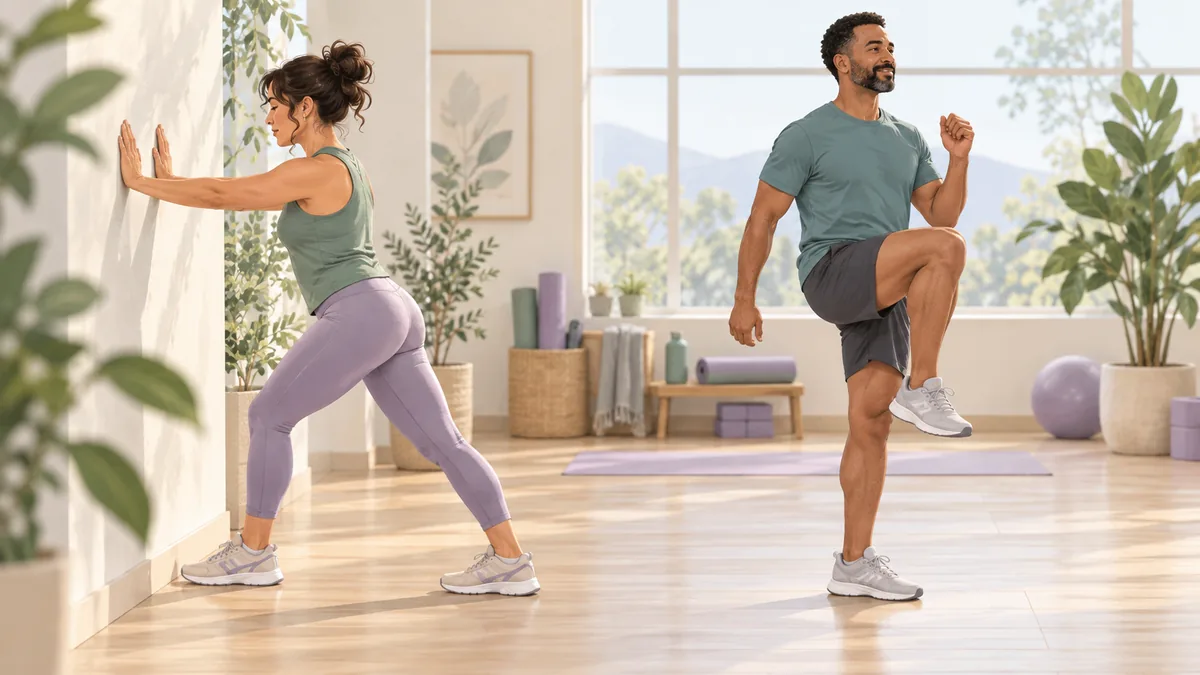
Static vs Dynamic Stretching: When to Use Each
Compare held and moving stretches, understand active versus passive work, and choose stretching that fits the session and performance context.
· 3 min read