
Bridge Preparation for Adults: Floor Drills and Coaching Decisions
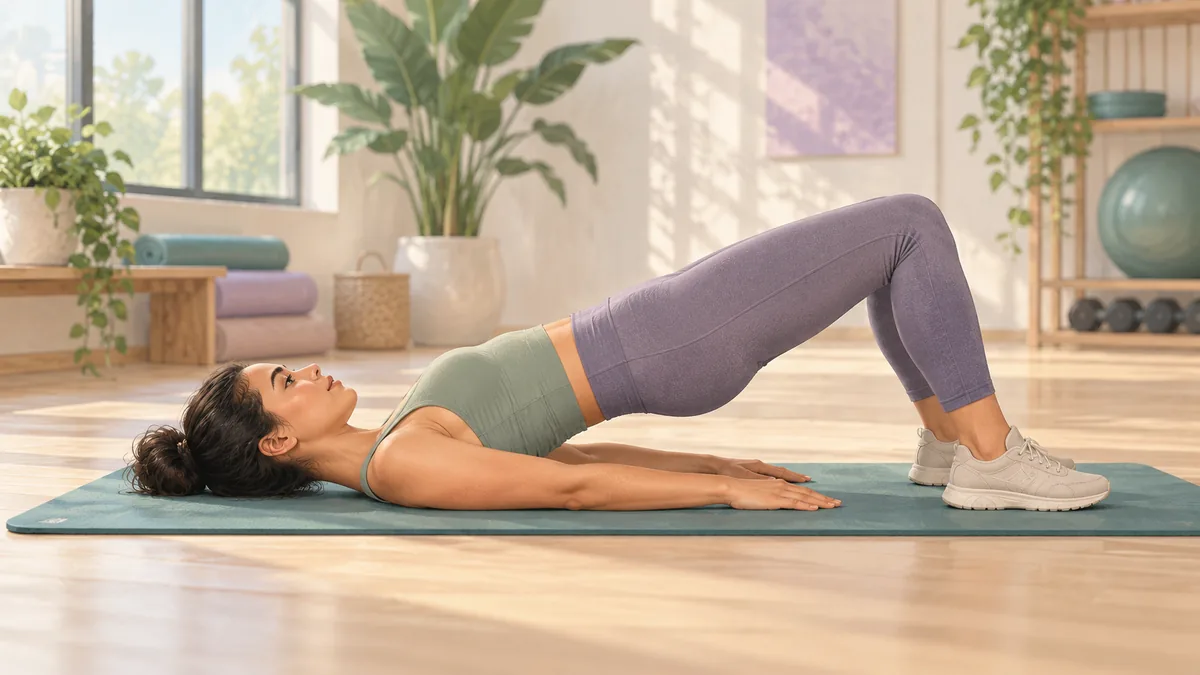
A gymnastics bridge is a raised backbend supported by the hands and feet. A floor glute bridge is a different exercise: the shoulders and head remain resting on the mat. The cover shows that floor preparation exercise, not a full backbend.
This guide separates preparation you can discuss with a professional from a raised skill that needs in-person instruction. It cannot determine whether your spine, shoulders, or wrists are suitable for backbends.
Set the right goal first
You can work on comfortable overhead movement and basic hip lifting without aiming for a full bridge. Reaching the final shape is optional and has no reliable deadline.
If you have back pain, a previous spinal injury or operation, a condition affecting exercise suitability, or are pregnant, seek individual advice before backbend practice. Do not try to “open” a painful area with deeper extension.
Why a photo cannot assess your bridge
A raised bridge involves movement and loading across several areas. A side-view shape cannot tell you which joint is contributing, why you feel restricted, or whether loading is appropriate. Avoid diagnosing “tight hip flexors” or a “weak upper back” from one position.
The AAOS gymnastics guidance emphasizes appropriate equipment, matting, and coaching for new moves. It is safety context, including youth material; it does not validate an adult bridge progression.
Preparation menu
After easy movement, choose one or two comfortable drills. The amounts below are small practice examples, not prerequisites for a raised bridge.
Floor glute bridge
Lie on your back with knees bent and feet planted. Keep your arms beside you. Gently lift the hips without pushing into a forced back arch, then lower under control. The head and shoulders remain on the mat.
Try a few repetitions, perhaps 5–8. Reduce the height or stop if you feel pain. Do not transfer weight onto the crown of the head.
Comfortable arm raises
Standing or lying with knees bent, raise your arms only as far overhead as comfortable. Notice whether you need to change your torso position to reach farther, but do not treat touching the floor as a pass/fail test. See the shoulder guide for alternatives.
Gentle kneeling hip stretch
If kneeling is comfortable, use padding under the back knee and a stable balance support. Shift only slightly into a mild stretch at the front of the hip. Avoid forcing the pelvis forward or arching the lower back to deepen it.
What to learn with a coach
Before attempting a raised bridge, ask a qualified gymnastics coach to assess readiness and select the setup. Discuss:
- How to enter and return without using the head as a support.
- Where assistance is needed and who will provide it.
- Whether a fixed padded exercise platform is appropriate.
- Which signs mean to end the attempt before fatigue changes it.
Do not use loose blocks, stacked books, movable furniture, or a wall behind your head as improvised solutions. Standing drop-backs, kickovers, and one-leg bridges are separate skills, not automatic next steps after a timed hold.
Stop rather than correcting through pain
Pinching in the back, neck pain, tingling, numbness, or wrist pain is a reason to stop the movement. Returning to a slightly elevated bridge is not a reliable solution for those symptoms. Seek assessment for persistent, worsening, or concerning symptoms.
Record preparation without turning it into clearance
Note which floor drills were comfortable, the amount, and how you felt afterward. Repeat a manageable amount before adding work. A coach should set the frequency and progression for raised backbends alongside your other wrist and shoulder loading.
For example, a reader may comfortably perform floor glute bridges but be unable to place the hands for a raised bridge. That does not mean they should press onto the head to bridge the gap. They can continue suitable floor preparation and arrange instruction.
Sources and further reading
These resources support the topics noted below. The practice routine and progression checkpoints are Ko Myat examples, not programs endorsed by these sources.
- AAOS OrthoInfo: Gymnastics Injury Prevention — Suitable equipment, spacing, coaching and spotting. Also contains youth-specific advice; not an adult progression study.
- Mayo Clinic: Stretching and Flexibility — Warm muscles, comfortable tension, no bouncing, and general stretching practice; not a splits prescription.
More Gymnastics guides
Wall Handstands for Adults: Preparation, Coaching and Progression
Plan handstand preparation, learn entries and exits with a coach, and track control and workload before reducing wall support.
· 3 min read
Wrist Preparation and Load Management for Hand-Supported Exercise
Use light wrist preparation, optional manageable resistance, and a loading log for push-ups and gymnastics without treating pain as a training target.
· 3 min read
Frog Stand: How to Learn Your First Arm Balance
Explore frog-stand setup, low weight shifts, short holds, and the limits of learning an arm balance without qualified coaching.
· 3 min read