
Pistol Squat Progression: Build Single-Leg Strength Step by Step
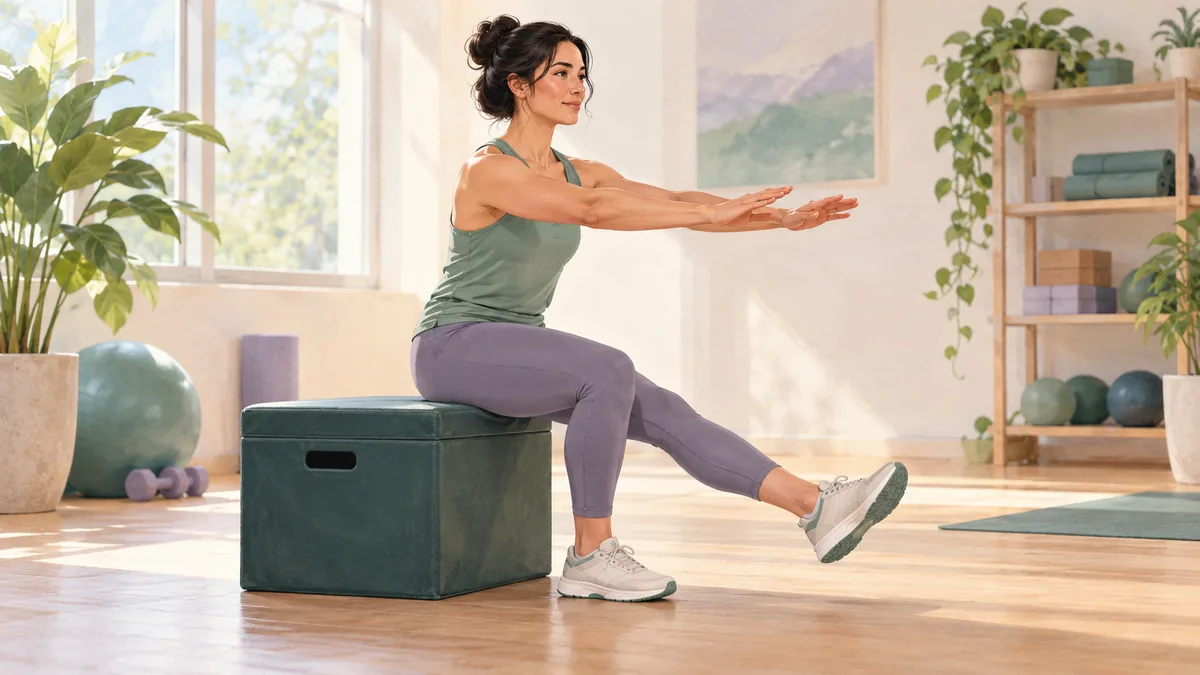
A pistol squat is a deep single-leg squat with the other leg held forward. It asks for strength, balance, range of motion, and coordination together. Difficulty with it does not tell you which quality is limiting, and a full pistol is not necessary for useful leg training.
This guide helps you select a single-leg variation and make small changes. The example quantities are practice suggestions, not clinical tests or clearance for deeper knee bending.
Start with a supported movement
After a warm-up, try a shallow split squat while holding a fixed support. Keep both feet on the floor and bend only as far as you can control comfortably. If single-leg loading is new, this may be the whole session’s leg exercise.
For ongoing knee or hip pain, recent injury, or previous surgery affecting movement, obtain individual guidance before increasing load or depth. Stop a painful repetition instead of using a counterweight to push through it.
Choose among three useful variations
Supported split squat
Place one foot forward and the other behind, both on a non-slip floor. Bend both knees a small amount, then stand. Use a fixed rail or properly secured exercise support for balance. Let the front knee follow the foot’s direction without forcing it outward.
Try one set of 4–6 each side. If balance remains the main challenge, keep the support; removing it is not mandatory progress.
Single-leg sit-to-stand
Use a fixed exercise box or bench high enough that you can sit down and stand back up without dropping. Begin with the other foot lightly assisting on the floor if needed. Reduce that help only when the return is controlled.
Do not use stacked cushions, wheeled chairs, or an unstable low target. Lowering the box and removing assistance at the same time makes it hard to understand what changed.
Assisted deeper single-leg squat
With a qualified coach checking a secure support, explore more depth while keeping assistance. Stop above any depth where control or comfort changes. A full-depth position is optional; there is no requirement to touch the floor.
Unsupported negatives into a floor landing are not part of this starting plan. If you cannot reverse or exit a position, keep a higher target and assistance.
Plan the amount of work
Pick one variation for one or two sets of several controlled repetitions per side. Rest as needed, and count it as leg work within two non-consecutive strength sessions initially. Do not add this whole menu to a session already containing demanding squats and lunges.
The 2026 ACSM recommendations support matching resistance training to individual goals and capacity. They do not establish a pistol-squat prerequisite such as a particular number of ordinary squats.
Troubleshoot without diagnosing yourself
| Observation | A useful experiment |
|---|---|
| You tip backward | Raise the sitting target and retain a fixed hand support |
| The free leg reaches the floor | Allow light foot support or a bent-knee variation |
| The working knee moves unpredictably | Reduce depth and repetitions; ask a coach to check control |
| You can lower but cannot rise | Use a higher box or more assistance |
These observations can have several causes. They do not prove weak hip flexors, tight ankles, or a particular injury. The deep squat guide offers repeatable range observations, not a diagnostic screen.
A progression example
Imagine recording six assisted sit-to-stands to the same box on each side, comfortably, over several sessions. Next time you reduce hand assistance slightly while keeping height and repetitions unchanged. If you start dropping onto the box, restore assistance. Keeping the same variation is a reasonable choice.
A coach can later help decide whether a full pistol serves your goals. A controlled split squat or supported sit-to-stand remains valuable even if you never perform the final skill.
Sources and further reading
These resources support the topics noted below. The practice routine and progression checkpoints are Ko Myat examples, not programs endorsed by these sources.
- ACSM: 2026 Resistance Training Guidelines — Healthy-adult resistance training, individualization, and home-based options; not a gymnastics protocol.
- Mayo Clinic: Strength Training — General resistance selection and recovery guidance; not validation of skill checkpoints.
More Fitness guides
Beginner Bodyweight Workout: An Adjustable Home Strength Plan
Start a bodyweight strength routine with manageable sets, easier variations, equipment checks, and a log that helps you decide when to progress.
· 3 min read

How Many Rest Days Do You Need? A Practical Guide to Recovery
How to plan rest days for bodyweight, gymnastics, and flexibility training, what active recovery looks like, and the warning signs that you need more rest.
· 3 min read
Muscle Soreness After a Workout: Should You Train Through It?
Understand delayed soreness, recognize symptoms that need medical care, and adjust activity without treating an online checklist as a diagnosis.
· 3 min read