
Beginner Bodyweight Workout: An Adjustable Home Strength Plan
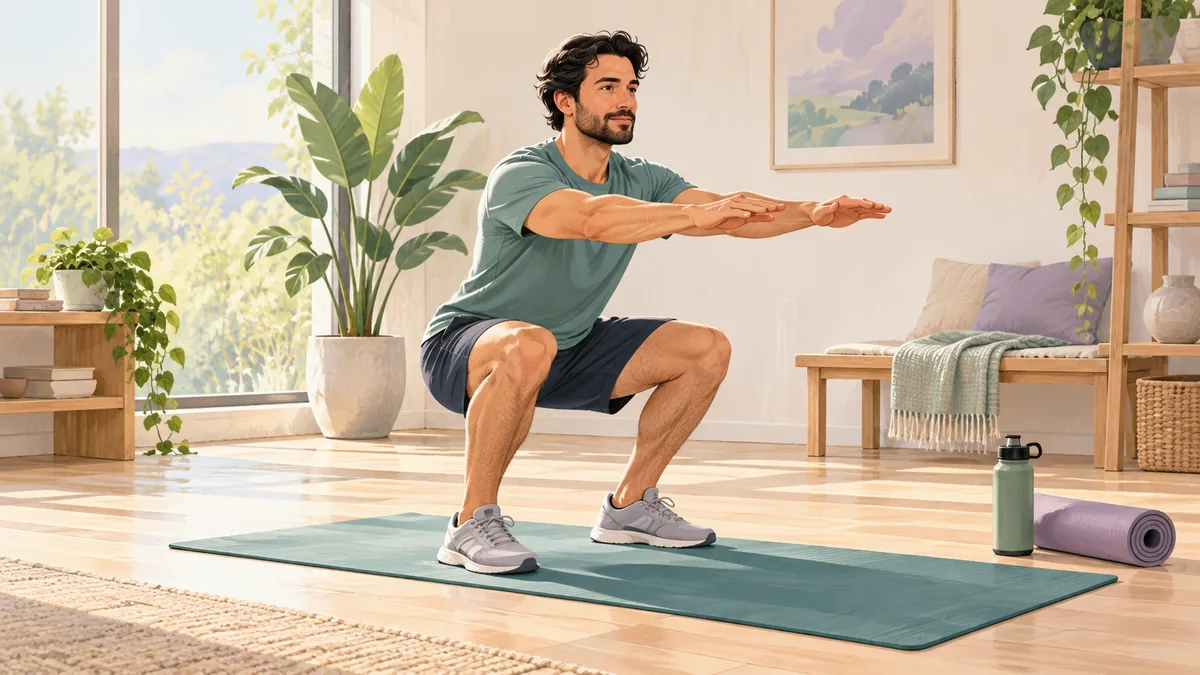
A useful first workout is one you can repeat without losing control of the movements. Start with a small amount of squatting, pushing, hip work, pulling when suitable equipment is available, and trunk work. You do not need to complete every advanced variation on this site.
This is a Ko Myat example for generally healthy adults starting strength training. It has not been tested as a six-week program and does not predict your results. If you have symptoms, an injury, or uncertainty about exercise suitability, obtain individual advice before starting.
Choose two days before adding a third
Try Monday and Thursday, with an optional third day only once the workload feels manageable. CDC adult guidance includes muscle-strengthening activity on at least two days each week, alongside aerobic activity. This workout covers the strength portion, not the whole activity recommendation.
Keep a day between sessions working the same muscles. On other days, choose a comfortable walk, ordinary activity, or rest. Adding separate push-up and pull-up routines on top would increase the workload; use their easier variations within this plan instead.
Set up and warm up
Clear a non-slip floor area. Use a fixed wall or an exercise bench that cannot slide or tip for incline push-ups. Rows need a purpose-built bar or suspension trainer installed and rated as its manufacturer requires. Household tables, door handles, and improvised door anchors are unsuitable.
Use the warm-up guide, then rehearse a few easier repetitions of the exercises. Preparation should leave you ready rather than tired.
Your first session
Begin with one set of each chosen movement. These quantities are starting examples, not minimum requirements. Rest until you can move and breathe comfortably again; a minute or two may be useful, and longer is fine.
| Movement | Example starting amount | Make it easier |
|---|---|---|
| Squat | 5–8 repetitions | Sit to a fixed exercise bench at a comfortable height |
| Incline push-up | 4–8 repetitions | Use a higher fixed surface or a wall |
| Glute bridge | 6–10 repetitions | Lift the hips a smaller comfortable distance |
| Equipment row, if available | 4–8 repetitions | Keep the body more upright |
| Knees-down plank | 5–15 seconds | Use a wall-supported hold |
| Optional reverse lunge | 3–5 each side | Hold a fixed support and reduce depth |
For the squat, keep your feet planted and let your knees follow your toe direction. For the bridge, lie with knees bent and lift your hips without forcing a back arch. For pushing and rows, move your torso as one unit rather than swinging. Keep breathing during the plank. End each set while you could still perform another controlled repetition or a few more seconds.
If the optional lunge makes the session too long or tiring, leave it out. If pulling equipment is unavailable, record the missing movement and arrange suitable equipment; this version then has a gap in pulling work.
Decide whether to repeat or progress
Afterward, record what you actually did and how ordinary movement feels the next day.
- Comfortable, controlled, and recovered: repeat the session. Later add one or two repetitions to one movement.
- Technique deteriorated: keep the easier version and reduce the amount.
- Repeated excessive soreness or fatigue: reduce the session and allow more recovery.
- Pain or feeling unwell: stop; do not substitute another painful variation.
Once one set feels manageable across several sessions, you can try a second set of selected movements. There is no need to add sets, repetitions, and a third training day together. The 2026 ACSM guidance emphasizes individualized, sustainable resistance training; complex methods are optional.
A worked log example
An imaginary reader records wall push-ups: 6, then 7, then 7 controlled repetitions on successive sessions. The next session feels unusually tiring, so they repeat 6 rather than lowering the support. That is a training decision, not a failed week. It is an example, not a testimonial.
Use the printable log on Start Here. Review after several weeks: is the same variation more controlled, is the amount sustainable, and are there symptoms to address? Completing this routine does not establish readiness for handstands or other inversions.
Match the plan to the space you actually have
Use this planning comparison before your first session. These are ways to organize the example, not separate tested programs.
| Your setup | Practical choice | Record the limitation |
|---|---|---|
| Clear floor and a fixed wall only | Use wall pushing, comfortable squats and floor options | Pulling is missing; do not invent a furniture row |
| Properly installed pulling equipment as well | Add an easy equipment row after checking the installation | Record the equipment and body angle, not just “rows” |
| Little time today | Pick a smaller selection and record what you omitted | The shorter version may not cover all movement groups |
| A coached skill lesson in the same week | Show the coach this plan and agree what to replace | Include that loading in your week rather than calling it rest |
When comparing sessions, use the same support height and variation. Six repetitions against a wall cannot be compared directly with six at a low bench. If you change the setup, mark it as a different version rather than assuming you became weaker or stronger overnight.
Make one next-session decision
Here is a hypothetical planning example: a reader completes a comfortable set of squats, but begins losing trunk control near the end of the incline push-ups. They keep the squat amount unchanged and choose fewer push-ups at the same high support next time. They do not add a third day to compensate. This illustrates an adjustment, not an observed reader result.
Use the weekly planner and session worksheet to write the exact variation, amount and one next choice. If you repeatedly cannot find a comfortable version, leave that movement out and obtain individual guidance. A filled-in log is useful information, not proof that the workout is suitable.
Sources and further reading
These resources support the topics noted below. The practice routine and progression checkpoints are Ko Myat examples, not programs endorsed by these sources.
- CDC: Adult Activity Overview — Population activity recommendations; not this sample workout.
- ACSM: 2026 Resistance Training Guidelines — Healthy-adult resistance training, individualization, and home-based options; not a gymnastics protocol.
- Mayo Clinic: Strength Training — General resistance selection and recovery guidance; not validation of skill checkpoints.
Organize your practice with the weekly planner, session log and setup checklist. Record your own choices; the worksheets do not assess skill readiness.
Related guides
Connected topics to explore, not a required training sequence.
How to Warm Up: An Adaptable 10-Minute Strength Routine
Build a warm-up from easy movement, comfortable ranges and exercise rehearsal, then use how you feel to adjust the session.
· 4 min read
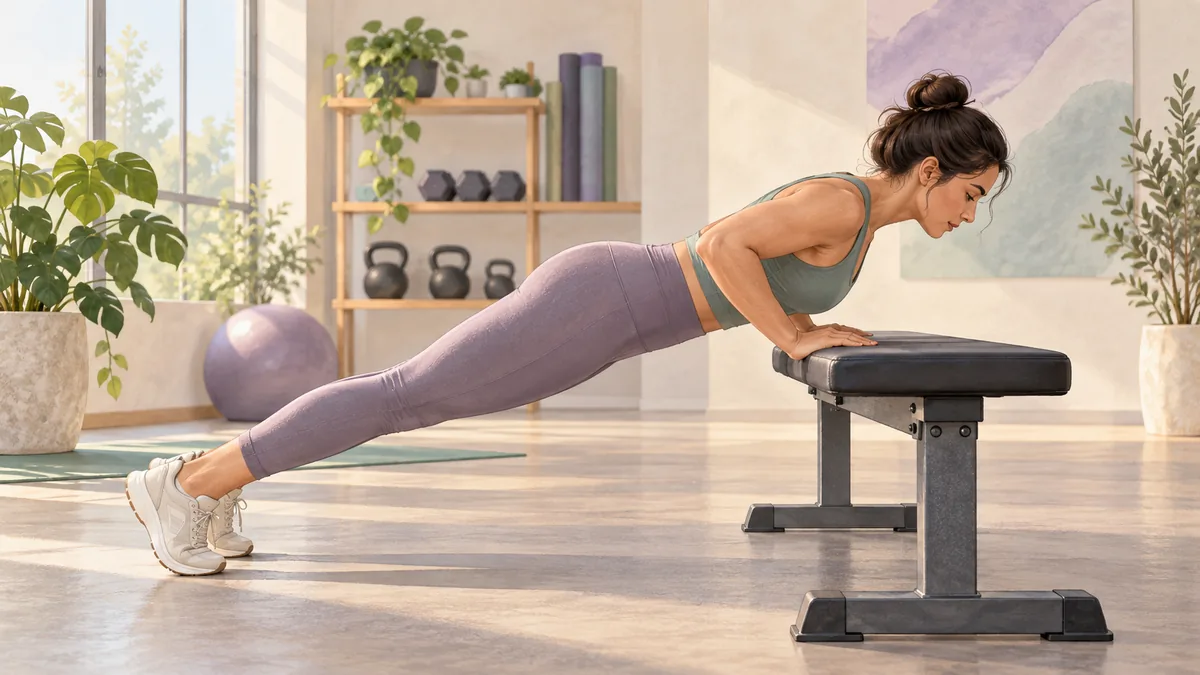
Push-Up Progression: Choose an Incline and Build Toward the Floor
Choose a stable incline, practise controlled push-ups, adjust the workload, and decide when to try the floor without a fixed deadline.
· 3 min read
Progressive Overload Without Weights: 7 Ways to Keep Getting Stronger
Bodyweight training can keep making you stronger if you know how to add difficulty. Here are seven practical methods, when to use each, and how to track them.
· 3 min read